
“Open, Sesame!” — From Morgiana to Me
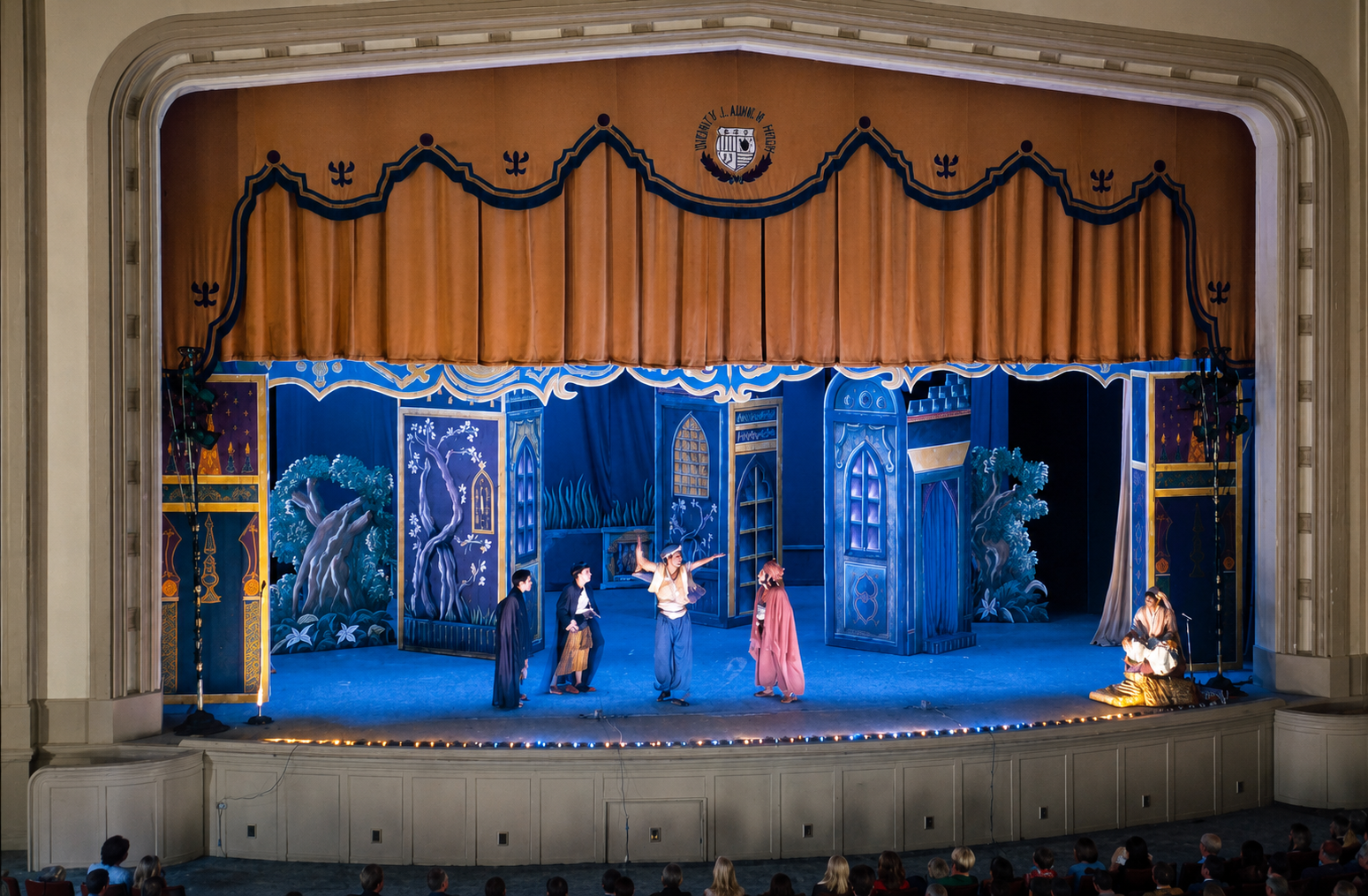
BCY’s 1975 Ali Baba and the Magic Cave
Blog 77 - Another moment when the theatre reminds me why it has always been my life.
This blog is a new memory and a new piece of writing!
June 23
“Open, Sesame!”
Captain of the Thieves in William Glennon's Ali Baba and the Magic Cave
When my daughter was in the 6th grade, she got in the car with a most astonished look on her face. “Mom!” she hooted. “A girl gave a book report today on Ali Baba, and when she got to the part about the treasure cave, she said that it was protected by a magic word. And she pronounced it ‘Sea-Same’!”
Looking very parental, I attempted to lead Elin toward showing compassion to the classmate. Having been an avid reader since age four, and a member of a theatrical family, Elin had known how to pronounce a number of difficult words for years, and could be condescending about such mistakes. But I didn’t want her to be snobby about such failures, so I guided her to her better self. Still, I have to admit that even to this day, I sometimes chuckle as I call the tiny, nutty kernels “Sea-Same seeds.”
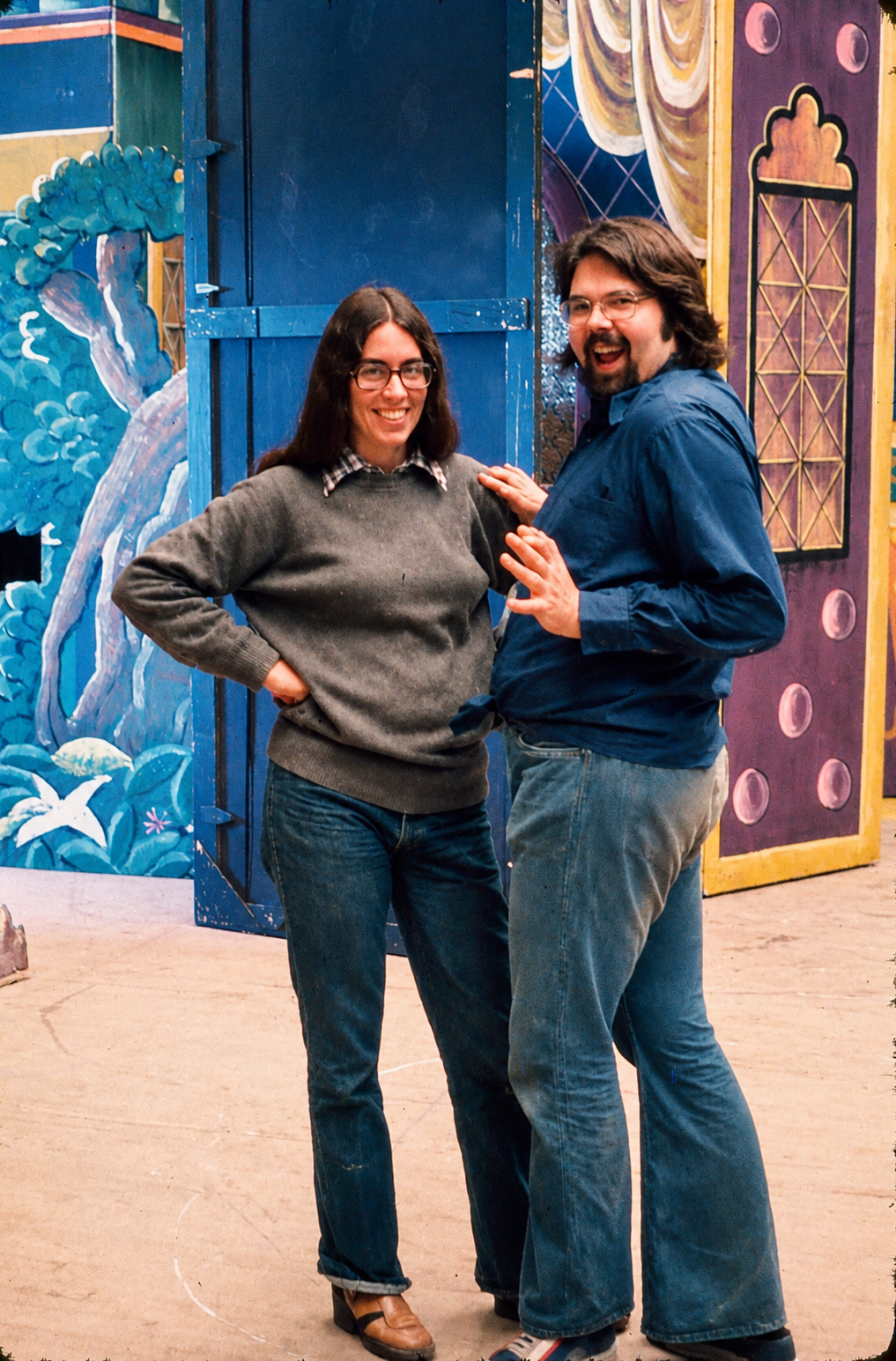
The Author with Crew Member
Ali Baba and the Magic Cave is a widely adapted children's play based on the classic Arabian Nights’ tale. It follows a poor woodcutter who discovers a hidden, treasure-filled cave protected by the magical phrase “Open, Sesame.” With help, he outwits a band of forty thieves, and learns the ultimate lesson that greed never pays. But for me, the enduring message is: the remarkable incantation can open a door!
The Birmingham Children's Theatre (BCT) adaptation performed in 1975 was written by William Glennon, and I was on the set design team for that show, a door opening to me through a friend who worked there. This era was a monumental time for BCT. The theatre company officially moved into its permanent home at the newly constructed Birmingham-Jefferson Convention Complex (BJCC) Theatre just as the complex itself opened. Glennon’s specific adaptation of Ali Baba was a staple of BCT's touring and mainstage repertoire during their 1970s chapter.
I remember—since the women’s liberation movement achieved major global milestones that year—that I was impressed by the female hero in the show. The United Nations declared 1975 International Women’s Year and organized the first World Conference on Women in Mexico City to formally address global sex-based discrimination. I was curious and excited about the movement, and I wondered about how young women and princesses might begin to be portrayed differently in fairy tales, plays, and Disney movies.
In Ali Baba, it is Morgiana, a clever and fiercely loyal slave girl, who serves as the main female protagonist anduses her quick wits and bravery to repeatedly save Ali Baba from the thieves.Through a series of brilliant tricks—including pouring boiling oil into the oil jars where the thieves are hiding and performing a distraction dance—Morgiana saves the day. Yes, the female lead is the hero!
When I was young, my mother always pushed my dad into the starring role of the household. Admittedly, she genuinely loved being a full-time mother and homemaker, and argued (as did other moms) that raising a family was a fulfilling, noble career. I loved my mama, but I couldn’t see myself following in her footsteps. She neveractively joined the Women’s Lib movement. Nevertheless, she was perfectly accepting of “ladies” who did find doors opening into work.
So, what was I to think of a national women’s movement as a child in a conservative Southern town and whose mother was not interested in the rebellion? Well, there was some family history to complicate and to contemplate. My mother never knew whether to champion or poke fun at one of our ancestors, Lillian Roden Bowron. She was a notable activist and field worker for the National American Woman Suffrage Association in my hometown of Birmingham. In the early 1900s, she traveled extensively across the United States organizing local chapters, delivering speeches, and campaigning for women's voting rights as part of the broader progressive movement. I thought she was fascinating.
A funny further layer in this scenario were the supporting characters: Mom’s mother and mother-in-law gave me great hopes for a future outside of—what I saw as—dreary daily ironing and bed-making. My paternal grandmother took a post in the city’s largest law firm as an assistant. And my mother’s own mother taught school, sewed for a living, and then became the Christian Education Director at her church.
And by golly, the luminous female protagonists of the books I pored over as an adolescent made me believe I could have any future I could dream of. Heroines like Jo March in Little Women, Dorothy Gale in The Wizard of Oz, Nancy Drew, Mary Lennox—and Morgiana!
Morgiana’s triumph in Ali Baba connects to a much larger story about women in theatre. Even though theatre has always depended on imagination, transformation, and the ability to see the world through another person’s eyes, for centuries, women’s voices and bodies were restricted onstage. Finally, in the commedia dell’Arte tradition of 16th-century Italy, women such as Isabella Andreini became celebrated performers and influential leaders of theatrical companies.
In England, women were not legally permitted to perform on public stages until the Restoration period, when actresses finally replaced the boy actors who had traditionally played female roles. At the same time in France, women performers became central figures in theatrical life and worked alongside playwrights and companies that shaped European drama.
By the 18th and 19th centuries, actresses became some of the most recognized public figures of their time. Performers such as Sarah Siddons in England became cultural icons, drawing enormous audiences and redefining what a woman could accomplish in the arts. Yet even as audiences admired these women, society often questioned their morality and professionalism. Actresses had to fight not only for artistic recognition but also for the dignity of being seen as serious professionals.
The last century brought an even greater transformation. Women moved beyond performing roles created by others and became playwrights, directors, producers, designers, scholars, and artistic leaders. They began reclaiming stories that had been overlooked and creating new theatrical worlds from their own experiences. In that sense, Morgiana’s cleverness and courage in a children’s play from 1975 are part of a much longer theatrical journey: women not only appearing onstage, but serving as heroes offstage while shaping the stories that audiences see, and unfastening those portals for the females following them.
Watching that journey unfold in the theatre world around me in the 1970s, I was also unearthing what my own role might be. Like many women of my generation, I wanted to have both a profession and a family. When my daughter Elin was born, I was a part-time costumer and adjunct professor with a flexible schedule. Some days she was at my mother’s house; other days she was with me in the costume shop, surrounded by fabric, sketches, and the magic of creating another world.
Perhaps that was the real unlatching of the gate done by Morgiana and all the heroines who came before and after her: women do not have to choose between being part of the story and creating the story. We can do both.