
Lines That Linger: Why Poetry Still Matters.
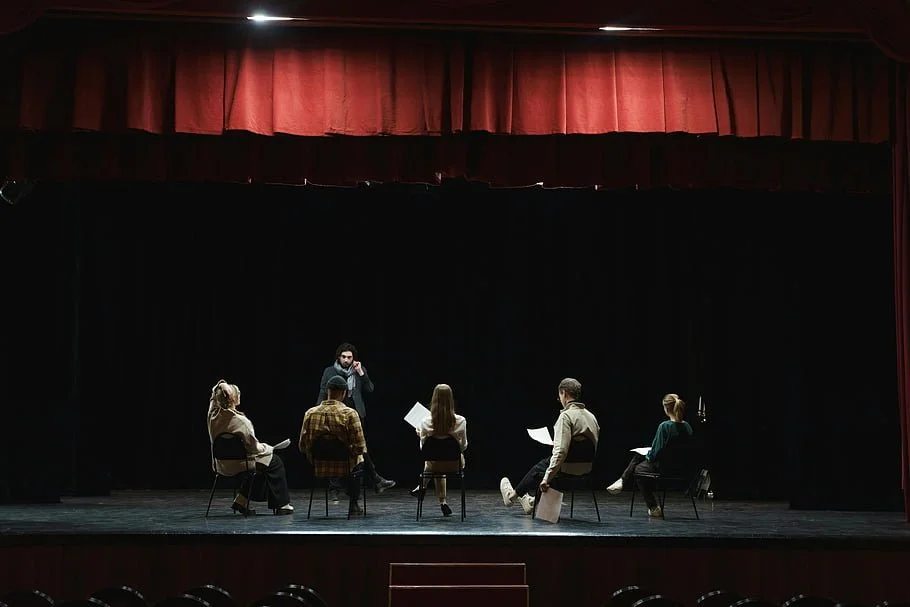
Blog 72 - Another moment when the theatre reminds me why it has always been my life.
When the Chorus spoke, even the silence listened.
“How did it come
Our stars could mingle for an afternoon
So long ago, and then forget us or tease us
Or helplessly look on the dark high seas
Of our separation, while time drank
The golden hours?”
Tegeus to Dynamene in Christopher Fry’s A Phoenix Too Frequent
The great Metaphysical poet John Donne died in London on this day, March 31, 1631. His deep love for Ann More—and their secret marriage that effectively ended his political career—are well known. I am always stunned when I read both his love poems, many written to her, and his holy works.
But then, I am often astounded by poetry. The word itself comes from the ancient Greek poieo—“I create.” How lovely is that?
Poetry has always carried what matters most. Long before we could read, it held epic storytelling, genealogy, history—even law—secure in memory. Religious life, too, has long been steeped in it. Since temple times, a piyyut, a liturgical poem meant to be sung or chanted, has shaped Jewish worship. Poetry lingers in the ear. It was meant to be spoken, heard, performed.
Not many playwrights today work primarily in poetic language, but there are notable exceptions. Tennessee Williams, many Irish playwrights, and figures like Federico García Lorca and Archibald MacLeish carried poetry into twentieth-century drama.
And, in the last century, T. S. Eliot helped revive poetic verse drama. I remember directing Murder in the Cathedral and never—not once—tiring of hearing the achingly beautiful lines he crafted for the Chorus.
I can still see an early rehearsal onstage: actors gathered in a loose circle, scripts worn at the edges, voices rising together in the Chorus—until the final line would settle, and no one moved, as if the air itself needed a moment to recover.
One playwright who fully embraced this tradition was Christopher Fry, best known for his mid-twentieth-century verse dramas.
In A Phoenix Too Frequent, a man and woman meet in the tomb of her dead husband in ancient Greece. They believe they may have passed each other briefly in childhood, when Dynamene visited the village of Pyxa, where Tegeus grew up. Most of us might say, “I wonder how our paths crossed in youth, and yet we never met again.”
Fry lifts the moment out of the ordinary into something almost holy. Life itself is astonishing—why not speak it that way? So his character asks:
“How did it come
Our stars could mingle for an afternoon…”
Too often, we drift away from the language of poetry—that subtle way of speaking about love and self-awareness, about peace and introspection, about sadness, joy, loneliness, and care. Like most artists, poets are rarely well paid, unless they are musicians. And yet, poetry endures—alive in song lyrics, in spoken word, in poetry slams filled with voices both young and old.
Poetry speaks to the human spirit too deeply to be ignored. It has lived in my ears in rehearsal rooms, in lighting booths, on stage, in my own breath. Let a little poetry find you today!