
Risking the Conduit
Blog 69
“This was a music I'd never heard. Filled with such longing, such unfulfillable longing, it had me trembling. It seemed to me that I was hearing the very voice of God.”
Salieri in Peter Shaffer’s Amadeus
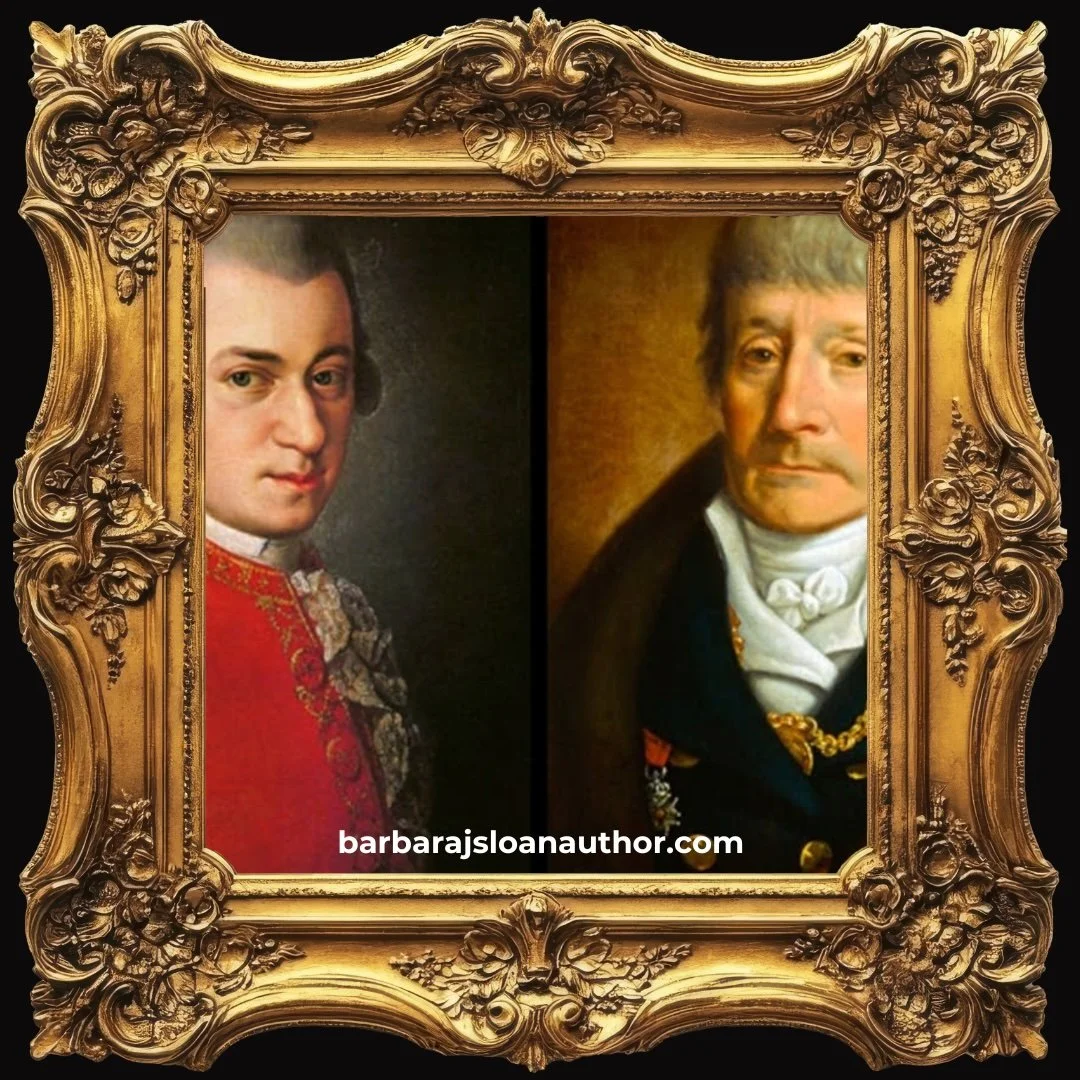
Born on this day in 1756, Mozart, were he alive, would be celebrating yet another impossible birthday. Can you add up the years? Yes, the 270th! SiriusXM satellite radio’s Symphony Hall promises to have a Mozart Marathon and be “all about Mozart all day.”
Wolfgang Amadeus’ middle name means “God's love” in Latin — and Mozart really is an amazing example of being a creative conduit of the Holy Spirit. He was audacious, unruly, even sometimes dismissed as “obscene.” And yet he remained, and remains, a vessel of God. So if Mozart wasn’t “perfect” and could still be a channel for the sacred, that gives me a lot of hope.
In the play, Salieri is astonished as he looks over Mozart's original scores, with no touch-ups and a perfection of melody. The thought comes to Salieri that Mozart is proof that God exists. Mozart himself once said music, which arrived in whole compositions, came through, not to him. The whole quote from the play that started this writing begins with, “On the page it looked nothing. The beginning simple, almost comic. Just a pulse — bassoons and basset horns — like a rusty squeezebox. Then suddenly — high above it — an oboe, a single note, hanging there unwavering, till a clarinet took over and sweetened it into a phrase of such delight! This was no composition by a performing monkey!”
Alfred Tomatis (1920 - 2001) was a French ENT specialist and audiologist who filtered electronically modified music — primarily Mozart and Gregorian chants — to train the middle ear muscles. His work not only helped opera singers hear their own voices, but also assisted children with autism, dyslexia, ADHD, and related challenges. Speaking of Mozart, he described the composer as “endowed with a ‘cerebral transistor’ able to capture what the creation and the environment were dictating to him.”
Tomatis said Mozart used music to express himself — or really, even more remarkably, to convey what he received from somewhere else — and was able to deliver to the world from the depths of his own being. He called the music of Mozart “a celestial message.” And he remarked that, “Mozart’s musical phrases transport us and immerse us in a different state (trance-like), which is in fact our original state — a state in which this prodigious being lived in permanence.”
I know I will never reach creative expression on the magnitude that Mozart did. But that is no reason to stifle what is inside of me — or to block what is Divine outside me and comes through me. I need not think I can’t create because I might fail, I might not measure up. Today, listening to the Mozart Marathon, I choose not to bottle up what moves through me. Like Mozart, I